
 Registrati
 Login
Login
Log in or Create account

 Africa
 Osservatorio Trasparenza
 Human Rights
 Territorio e istituzioni
 Lavoro Persona Tecnologia
 Osservatorio di Diritto sanitario
 Osservatorio sul diritto elettorale
 America Latina
 Storico focus
 Riforme istituzionali e forma di governo
FOCUS - Lavoro Persona Tecnologia
Gli esoscheletri come tecnologie di potenziamento e strumenti di controllo del lavoratore: nuovi rischi per la protezione dei dati
Abstract [It]: L’impiego in azienda degli esoscheletri, tecnologie indossabili concepite per supportare e potenziare le capacità fisiche del lavoratore, dà origine alla figura del lavoratore aumentato. Il loro funzionamento, basato su sensori che rilevano dati biometrici per modulare l’assistenza fornita, comporta inevitabilmente forme di monitoraggio continuativo dell’attività lavorativa, sollevando questioni giuridiche rilevanti alla luce del Regolamento (UE) 2024/1689 (AI Act), del GDPR e dell’art. 4 dello Statuto dei lavoratori, in relazione al bilanciamento tra innovazione tecnologica e tutela dei diritti fondamentali.
Title: Exoskeletons as worker’s enhancement technologies and control tools: new risks for data protection
Abstract [En]: The use of exoskeletons in the workplace—wearable technologies designed to support and enhance workers’ physical abilities—gives rise to the figure of the augmented worker. Their functioning, based on sensors that collect biometric data to modulate the assistance provided, inevitably entails continuous monitoring of work activity, raising significant legal issues in light of Regulation (EU) 2024/1689 (AI Act), the GDPR, and Article 4 of the Workers’ Statute, concerning the balance between technological innovation and the protection of fundamental rights.
Parole chiave: esoscheletri intelligenti, lavoratore aumentato, Human Enhancement, monitoraggio e dati biometrici, AI Act
Keywords: Intelligent Exoskeletons, Augmented Worker, Human Enhancement, Monitoring and Biometric Data, AI Act
 Scarica il Documento integrale
NUMERO 5 - ALTRI ARTICOLI
-
ITALIA - DOTTRINA
La riforma della Corte dei conti e della responsabilità amministrativa
ITALIA - DOTTRINARiflessioni sparse sul futuro identitario della Corte dei conti nelle materie di contabilità pubblica
-
ITALIA - DOTTRINA
Finalità e impianto della nuova legge sulla montagna: il nodo delle nozioni di comune montano
ITALIA - DOTTRINAIl dibattito sull’indipendenza del Tribunal Constitucional in Spagna
ITALIA - DOCUMENTAZIONEFocus lavoro, persona, tecnologia - Contributi dell'11 febbraio 2026
 STUDI FEDERALISMI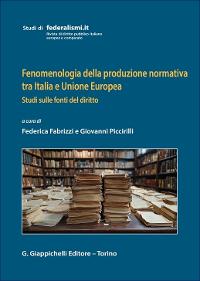
Fenomenologia della produzione normativa tra Italia e Unione Europea
F. Fabrizzi, G. Piccirilli (a cura di)2025
 disponibile anche in e-Book





Segreteria di redazione
Chiara Arruzzoli; Simone Barbareschi; Alina Iuliana Benea; Andrea Caravita di Toritto; Maria Cristina Carbone; Adriano Dirri; Eleonora Iannario; Giulia Renzi; Giulia Santomauro; Francesco Severa; Sergio Spatola; Giulia Vasino.
E-mail: redazione@federalismi.it
Informazioni generali
Codice etico
Collana "Studi di federalismi.it"
Powered by
Execution time: 15 ms - Your address is 216.73.216.4